
Permissions and scopes
The framework uses a two-layer model: capability codes decide whether an action is allowed, and data scopes decide which rows are visible.
The two layers
| Layer | Target | Typical usage |
|---|---|---|
| Capability code | Routes, buttons, APIs | can('system.user.create') |
| Data scope | Query and write rows | Gate policies filter by department or creator |
Neither layer replaces the other. Holding a capability code does not grant visibility of all data, and data within scope does not grant arbitrary actions.
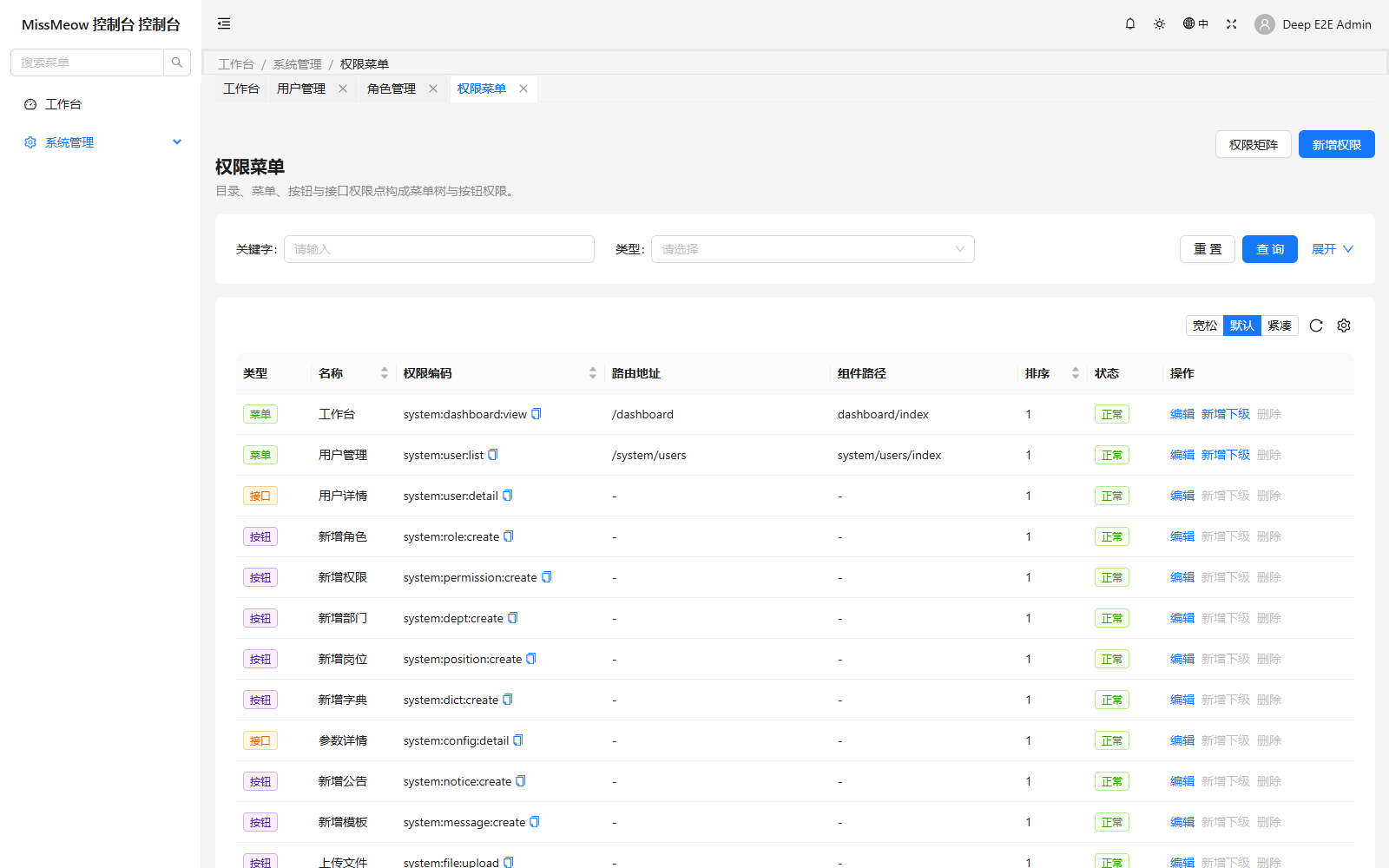
Capability codes
- Defined in migrations and grouped by module
- Checked centrally at the route layer, with optional second checks in controllers
- Frontend hides buttons by code, while the server always validates independently
Data scope gates
- A Gate is a data-scope policy name, not a capability code
- List queries are filtered automatically to prevent unauthorized reads
- Write operations verify each target row against the scope
- Structural operations such as department sorting and parent selection are scope-checked too
Extending scopes
Implement a custom Gate and call it from the service layer. The framework does not bind to a specific business dimension; department, tenant or creator filters can all be integrated.